A Claude subscription doesn't give your agency a complete booking system. Rellay combines specialised booking AI with the shared system for deals, contracts, advancing, travel and finance. It can turn incoming emails into deals, keep those deals current and prepare the work that follows.
That matters when a promoter changes a fee while your assistant is preparing the contract and finance needs the billing details. The agency needs more than a well-written reply. It needs the change in the right booking, with enough context for the next person to act.
Claude and ChatGPT can connect to tools, take actions and share information across teams. The reason to choose Rellay is that the booking product is already there. You customise it to your agency instead of building that product around a general assistant.
Rellay vs Claude and ChatGPT: what your agency gets
The question is what comes with the product, and what your agency must put together around it.
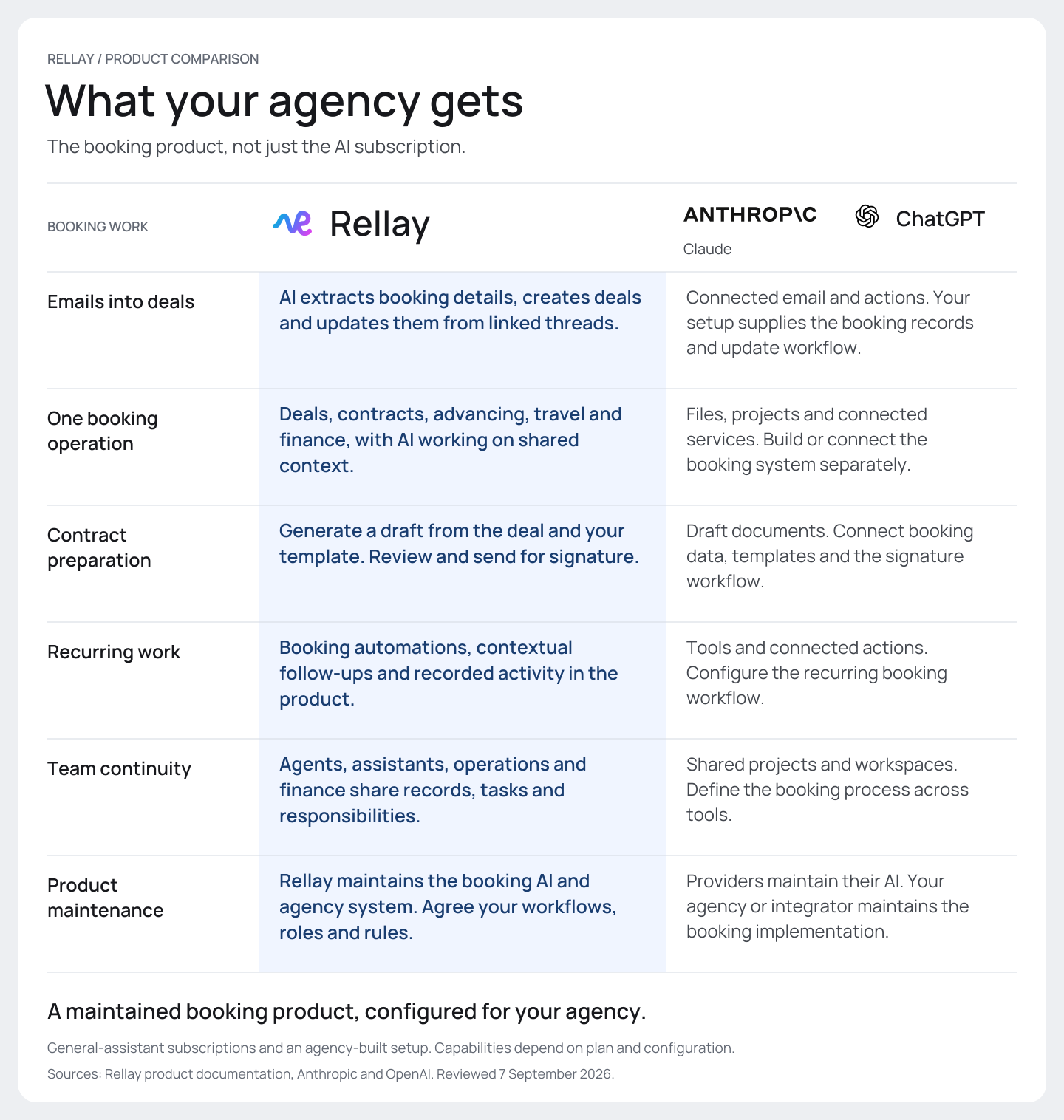
| Booking work |  Rellay Rellay |
 Claude Claude ChatGPT ChatGPT |
|---|---|---|
| Turn emails into deals | AI extracts booking information, creates deals and updates them from linked email threads. | Read emails and take connected actions; your setup supplies the booking records and update workflow. |
| Run the full booking operation | Deals, contracts, advancing, travel and finance in one system, with AI working on that context. | Work with files, projects and connected services; the booking system is built or connected separately. |
| Prepare the contract | Generate a draft from the deal and your agency's template, then review and send for signature. | Draft documents; connect or build the workflow linking booking data, templates and signatures. |
| Handle recurring work | Booking automations, contextual follow-ups and recorded activity within the product. | Tools and connected actions support automation; you configure the recurring booking workflow. |
| Keep the team working together | Agents, assistants, operations and finance share booking records, tasks and responsibilities. | Shared projects and workspaces provide collaboration; your setup defines the booking process across tools. |
| Maintain the booking product | Rellay maintains its booking AI and agency system. Your team agrees its workflows, roles and rules. | The providers maintain their AI products. Your agency or integrator maintains the booking-specific implementation. |
Download the comparison graphic
This compares Rellay with general-assistant subscriptions and an agency-built setup, not with every third-party product those assistants can connect to. Sources reviewed 7 September 2026: Claude capabilities, ChatGPT apps and actions, shared ChatGPT projects, and the Rellay mechanisms explained below.
1. Let the conversation do real booking work
An offer changes while the agent negotiates.
The promoter revises the fee. A different person will sign. The artist has a question about the travel. Each message can change what the agency needs to do next.
Rellay reads incoming booking requests, extracts the relevant details and can create the deal. For an existing linked email thread, it can extract new information and update the booking record. The conversation stays connected to the work it belongs to.
Your agent still decides whether the revised terms are acceptable. Recording a proposed fee is not accepting it on the artist's behalf. But the agent should not have to enter a second version of every message before the rest of the agency can use it.
We describe that mechanism in more detail in Manual Booking Data Entry Is Dead.
You can also build email-to-record automation around Claude or ChatGPT. You then need to connect the inbox to the booking system, match messages to the correct deal and decide how to handle conflicting details. Rellay supplies that booking-specific capability as part of the product.
The reason to buy it is the work already built around the email, not a claim that a general model cannot understand an offer.
2. Carry the agreed deal into the next job
A booking isn't complete when the AI has drafted a reply. Someone still has to prepare the contract, organise advancing and give finance the right information.
Rellay brings the AI and those operations into the same system. Here is an illustrative sequence using its documented capabilities:
- A promoter replies in a linked thread. Rellay reads the conversation and can update the existing deal with the new booking information. The source thread remains attached.
- The agent decides the terms. They check the relevant details and decide what the agency agrees to. The commercial decision remains theirs.
- The assistant prepares the contract. Rellay generates a draft from the deal and the agency's template. The team reviews it before sending it for signature.
- The outgoing reply is prepared in context. When an email is initiated through Rellay's AI chat, the recipient and content are presented for review before sending.
- The booking retains the result. The deal, linked conversation, document and recorded activity give colleagues a place to pick up the work.
This is a sequence of available product functions with human decisions between them. An incoming message does not automatically accept an offer or rewrite a signed contract.
The same booking system supports advancing forms, timetables, guest lists, travel information, itineraries and deal-linked invoices. The AI can use booking context to prepare replies, documents and follow-ups rather than asking the team to assemble that context from scratch for each task.
For the owner, this is the larger reason to consider Rellay. It is not an email assistant beside the agency's real work. It is the shared system used to carry that work through.
3. Give the team one booking operation
An agent is away when the promoter calls. An assistant needs the latest contract. Finance wants to know which billing contact to use.
If the answers live in one person's carefully configured AI workspace, that person still has to explain the booking to everybody else. The owner can end up being the fallback because they remember the negotiation.
Rellay puts conversations, documents, tasks and recorded activity around the booking. Agents, assistants, operations and finance work with the same deal. Tasks can have an owner and a due date, so a handover includes responsibility as well as information.
Customisation makes that shared system fit the agency. Workflows, roles, rules, terminology and templates are adapted to how the team operates. An assistant preparing paperwork and an agent handling a commercial change do not have the same job.
Claude and ChatGPT also offer shared context and, on relevant business plans, administrative controls. Those capabilities can support a good agency setup.
What Rellay adds is the booking operation the team shares. Your agency does not have to assemble the deals, documents and team workflows around those AI workspaces.
The value for an owner is less dependence on the person who knows where everything lives. The agent keeps the relationship; colleagues have a system in which to do their part.
4. Buy the booking product, not another job maintaining it
There is a sensible reason to build your own system: you want to own its design and have someone responsible for running it.
There is a less sensible reason: the first prompt worked, so the rest must be nearly done.
Before extending a personal Claude or ChatGPT setup across the agency, name who owns four jobs:
- Booking logic: how messages match artists and deals, which fields change and how conflicting information is handled.
- Team rules: who can access the relevant information, act on it and review consequential communications.
- Connections and testing: whether inbox, calendar, documents and booking records still work together after a change.
- Maintenance and support: who investigates a failed update and helps the team when the setup stops behaving as expected.
The AI providers maintain their own products. They do not automatically become responsible for the booking implementation your agency has assembled around them. That responsibility sits with your team, an integrator or another software vendor.
With Rellay, the booking AI and the agency system are one maintained product. Your team still needs to agree its workflows and check important decisions. It does not need to become the developer of the booking system it uses every day.
There is no universal cost winner here. A focused custom workflow may be entirely sensible. The buying decision is whether maintaining it is a job your agency deliberately wants to own.
Give general AI a useful job. Give the agency a booking system.
Keep using Claude or ChatGPT when they help you analyse a document, explore a market, prepare a pitch or think through an artist's strategy. A team with the skills and appetite to build a custom booking system can make that choice too.
Choose Rellay when you want specialised AI doing booking work inside a complete agency system: incoming conversations becoming deals, contracts prepared from the agreed record and colleagues working from shared context.
Your agents were hired to negotiate, develop artists and build promoter relationships. Rellay puts the related records, documents and follow-ups in one booking system, with AI to help carry the work forward.
Comparison marks belong to their respective owners. No affiliation or endorsement implied.