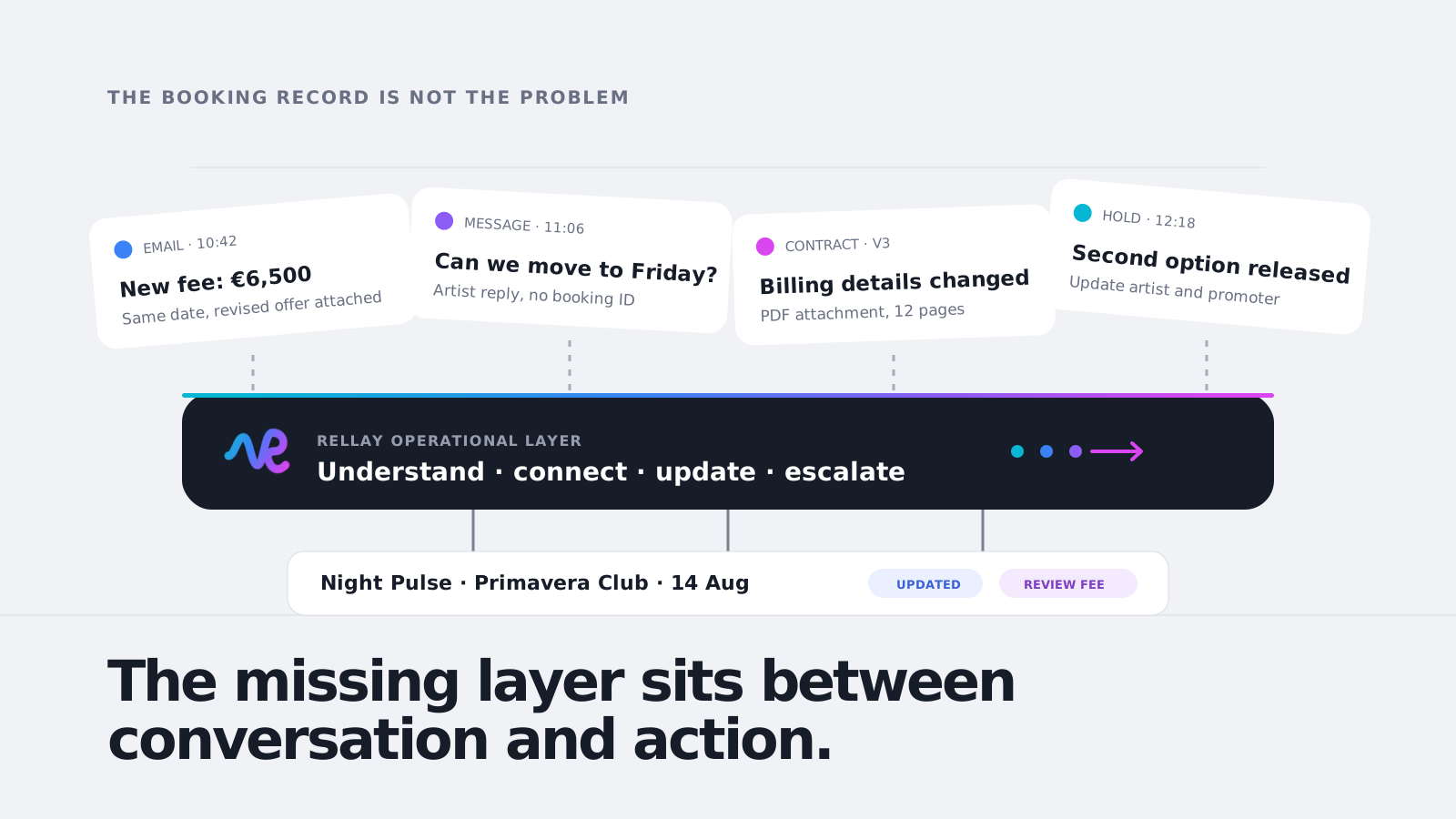
Current booking systems become obsolete when they remain passive databases that people must constantly feed. The upgrade is not another AI button. It is an operating system that understands incoming work, keeps the booking current and brings people in for the decisions that matter.
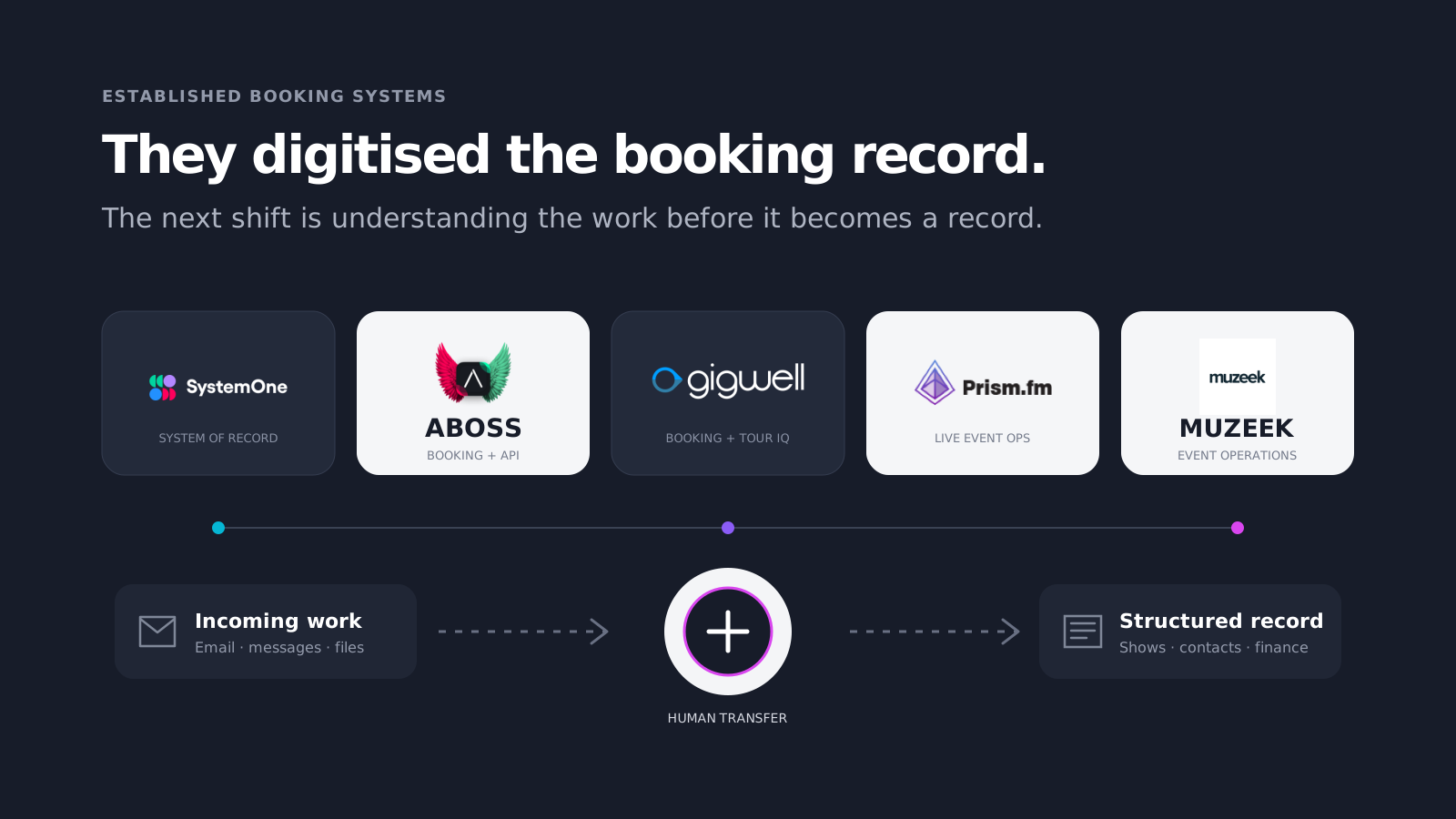
SystemOne, ABOSS, Gigwell, Prism and Muzeek helped move the live music industry out of spreadsheets.
They solved a real problem. They gave booking teams one place for calendars, offers, contracts, invoices, advancing, travel and settlements. Some now offer APIs, automatic reminders, ticketing integrations, AI digests and other useful automations.
And yet, inside many agencies, the real operation still begins somewhere else.
A promoter changes the fee by email. An artist answers on WhatsApp. A revised contract arrives as an attachment. A date moves after the show was entered. An agent reads each message, works out what it means, finds the right booking and updates the right fields.
The database is modern.
The way it gets fed is not.
That is the part of current booking software that is obsolete.
Legacy booking software solved yesterday's bottleneck
The first generation of booking platforms replaced paper planners, Excel files and Word templates. That was a huge improvement.
SystemOne publicly positions itself as one system covering the full process from request to show. ABOSS connects agencies, artists and crews through booking, mobile and API products. Gigwell combines booking management with venue discovery and ticket-count reporting. Prism covers calendars, offers, advancing, settlements and live-event intelligence. Muzeek connects bookings, paperwork, ticket reports, payments and public event assets.
These products are not identical. They do not serve exactly the same teams. They are also not standing still.
ABOSS now promotes an open API, AI-powered daily digests and workflow automations. SystemOne promotes automated advancing, eSign reminders and communication automations. Gigwell automates ticket counts and payment follow-up. Prism automatically ingests ticketing data. Muzeek automates paperwork, settlements and ticket reports.
So the honest argument is not that established booking software has no automation.
It is that most booking systems were designed around structured records. The user opens a show, a contact, a contract or an invoice, then tells the system what happened.
The new generation starts one step earlier.
It understands the work before someone turns it into a record.
The expensive work happens before the record is accurate
Look at a normal booking day.
The team is not short of data. It is surrounded by it.
The problem is that the data arrives as conversation: a sentence inside a long email chain, a new attachment, a voice note, a forwarded message or a reply that only makes sense if you know the history of the deal.
Before the booking platform becomes accurate, someone has to:
- identify the artist and show;
- understand which term changed;
- compare it with the current record;
- decide whether the change is safe;
- update the correct objects;
- notify the right people;
- preserve the source in case anyone asks why.
Traditional software helps after those decisions have been made.
AI-native software can participate in making the operation current.
That difference is easy to underestimate because manual transfer looks harmless. Each update may take only a few minutes. Across every offer, hold, contract, payment, travel change and artist question, it becomes an operating model.
The agency pays for it through slower responses, duplicated work, fragile handovers and senior people answering questions that the system should already understand.
Our first production article shows this problem at real agency volume: manual booking data entry is already work AI can do.
An AI feature is not the same as an AI-native operation
There is now an AI label on almost every software category.
Some tools summarise information. Some draft emails. Some surface a daily digest. Some let a team build its own automation through an API.
Those features can be genuinely useful.
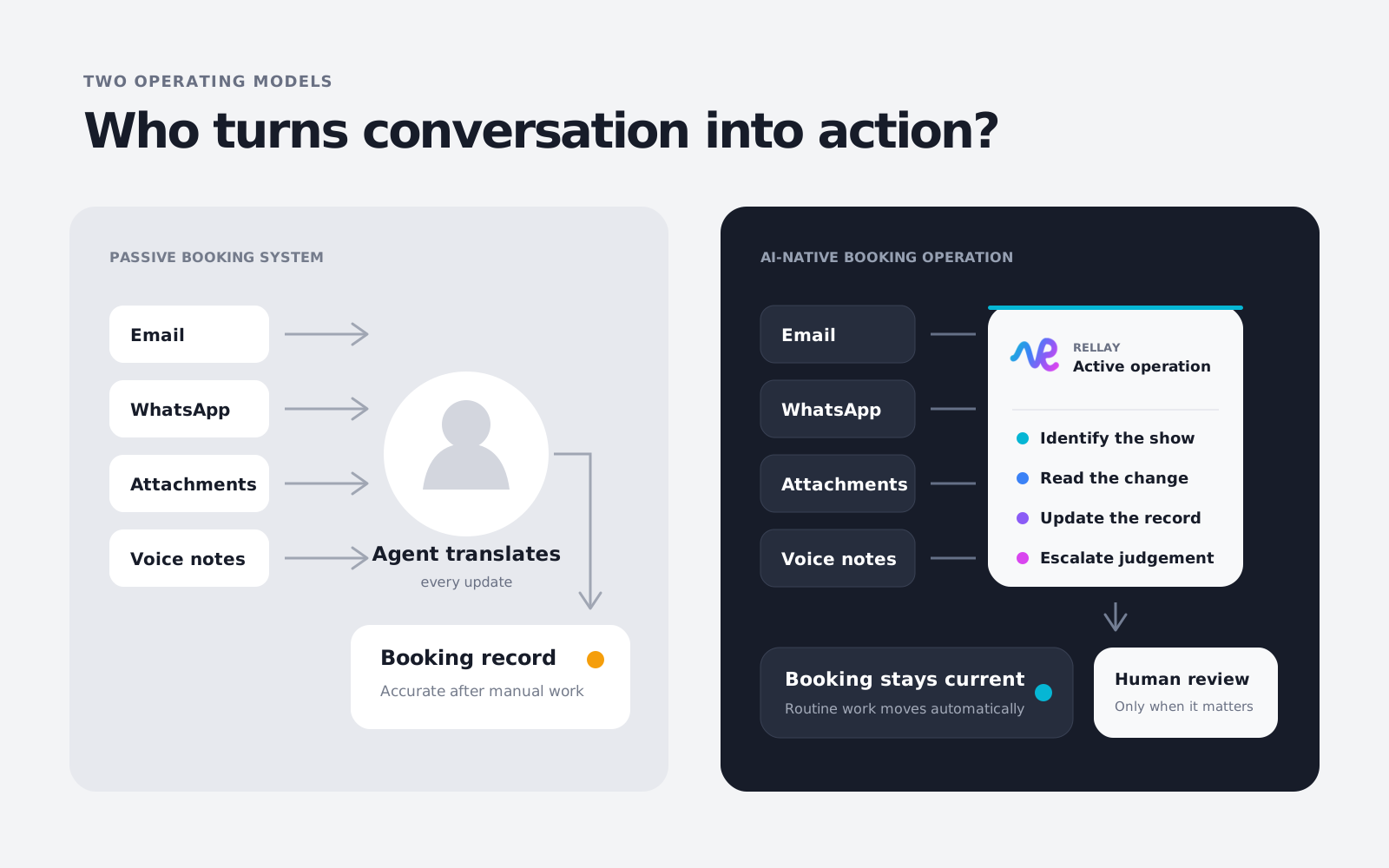
But the real test is not whether the product contains AI. The real test is who still carries the work from conversation to action.
If an agent must find the record, paste the context, write the prompt and decide which system needs updating, the agent remains the integration layer.
An AI-native booking operation begins with the incoming work. It can identify the relevant show, read the current state, extract the change, prepare or apply the right update and retain the source. It knows when a sensitive decision still needs a person.
The human agent should own the relationship, the negotiation and the judgement.
They should not spend the day carrying information between an inbox and a database.
The market is already moving beyond the database
This shift is not theoretical.
BASIS already promotes creating shows from email chains, WhatsApp access and automated booking documents. OnDek describes an AI operating system that handles roster context, briefings, CRM and email triage. Other AI-native music platforms are building active agents around catalogues, releases, fan data, artist intelligence and opportunity discovery.
They do not all compete with Rellay. Patchline is centred on releases and direct-to-fan operations. Recoup focuses on label and artist workflows. ROSTR is an intelligence platform. Booking-Agent.io helps artists and agents discover venues and talent buyers.
But together they show where music software is going.
The category is moving from software that waits to software that participates.
For booking agencies, the winning product will not be the one with the longest feature list. It will be the one that can understand the operation deeply enough to move work forward without losing control.
Importing your history takes hours. Customization makes it your OS
Agency owners often delay a software change because they imagine the worst version of a migration.
Years of show history need to be rebuilt. Artist records need to be cleaned manually. Contacts, contracts and financial data get trapped in two systems. The team spends months operating in parallel while trust collapses.
That is not how the first step with Rellay works.
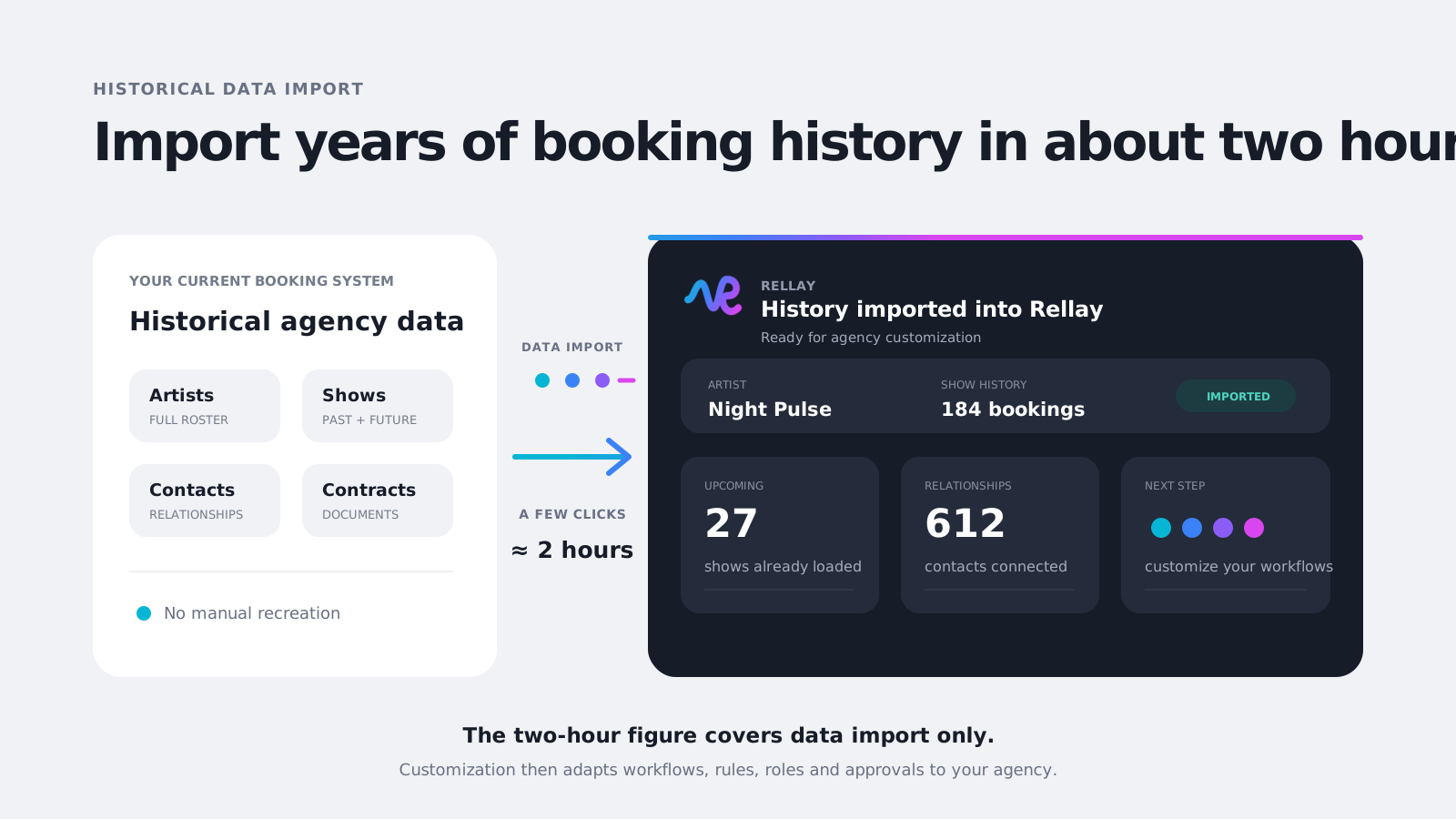
Rellay imports the historical data already stored in your legacy booking software directly into Rellay. For supported systems, the data import takes a few clicks and approximately two hours.
That two-hour figure covers the historical data import. It does not cover the customization of Rellay for your agency.
Customization comes next. This is where we adapt Rellay to your workflows, approval rules, roles, terminology, templates and the exceptions that matter to your team.
That work is not an onboarding detail. It is what makes Rellay relevant. A generic database can store your shows. A customized operating system understands how your agency works, who decides what and where the human relationship must remain in control.
The time required for customization depends on the agency, the scope and the complexity of its processes. We should not present the two-hour import as a two-hour implementation or go-live.
The import gives Rellay your history. The customization gives it your agency's way of working.
Five questions to ask before your next renewal
Do not begin with a 70-line feature comparison. Begin with the way work actually moves.
1. Where does the work really start?
If the answer is email, WhatsApp and attachments, measure what happens before the booking record becomes accurate.
2. How many times does the same information move?
A fee, date or contact should not need to be interpreted and entered again across several tools.
3. Can the system understand a change, or only store it?
A database can show the current fee. An active system should also understand the message that changed it and keep the source attached.
4. What still depends on perfect human discipline?
If the system is only reliable when every busy agent updates every field immediately, the workflow is carrying an invisible risk.
5. What do import and customization actually require?
Ask for two separate answers. How will your history be imported, and how will the product be customized around your agency? A fast import matters. The value comes from what the system can do with that context once it reflects your real operation.
Booking agencies no longer need passive software
The systems that replaced paper and spreadsheets moved the industry forward.
Now the bottleneck has moved.
The problem is no longer where to store a booking. The problem is how quickly and reliably the agency can turn every conversation into an accurate operation.
That requires a different kind of software.
Software that reads before an agent copies. Software that connects a message to the right show. Software that acts on routine changes and brings people in for the decisions that matter. Software that arrives with the agency's history, then is customized around the way its people actually work.
That is the shift from a booking database to an AI-native booking operation.
The import should take hours. The customization should be treated as the work that makes the system worth adopting.
Bring your history. Build your agency's operating system.
Talk to us about importing your history and customizing Rellay around the way your agency actually works.
Talk to Rellay